

Can you see clearly? Are your eyes healthy? Those overlap. They are not the same thing.
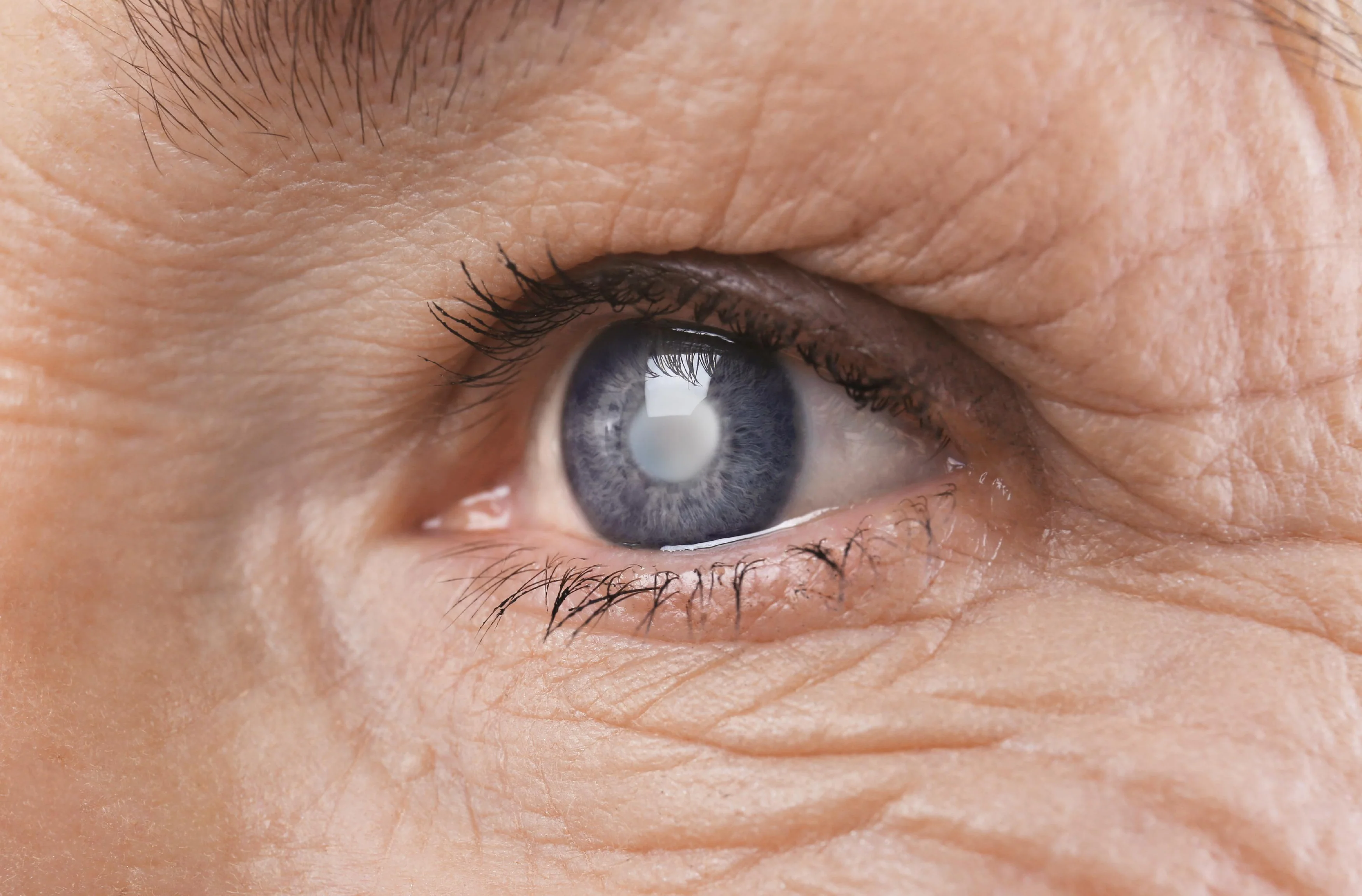
A comprehensive eye exam checks your prescription, and depending on what you need it can also assess the cornea, the natural lens, the retina and the optic nerve, measure the pressure inside the eye, and check focusing and how your eyes work together. Some of that changes quietly, before you notice anything at all.
Can you read the letters? Do you see better with lens one or lens two? Has your prescription changed?
All useful. All of it answers the first question and none of the second.


Most blood vessels sensibly stay hidden inside your body. The retina is the exception. At the back of the eye, its very small blood vessels can be examined directly.
That matters, because changes there can sometimes be associated with eye disease or with broader health conditions. The exam is not replacing your family doctor. It is just one of the few appointments where someone can look straight at blood vessels without surgery to get there.
Which is why “but I can see fine” is not a complete eye-health strategy. Many eye conditions arrive without obvious symptoms in the early stages, which is exactly when treatment tends to work best. Glaucoma is the standard example.
Changes linked to diabetes or high blood pressure can also turn up in the retina before vision does. Each of those has its own Smart Local Read, because neither deserves a drive-by paragraph here.
Part of an eye-health assessment may involve measuring the pressure inside the eye. On its own, that number settles very little. Pressure can be raised in eyes that turn out to be fine, and glaucoma can develop in eyes whose pressure reads perfectly normal.
It is one of several things an optometrist weighs alongside the appearance of the optic nerve, your medical and family history, and the rest of the exam.
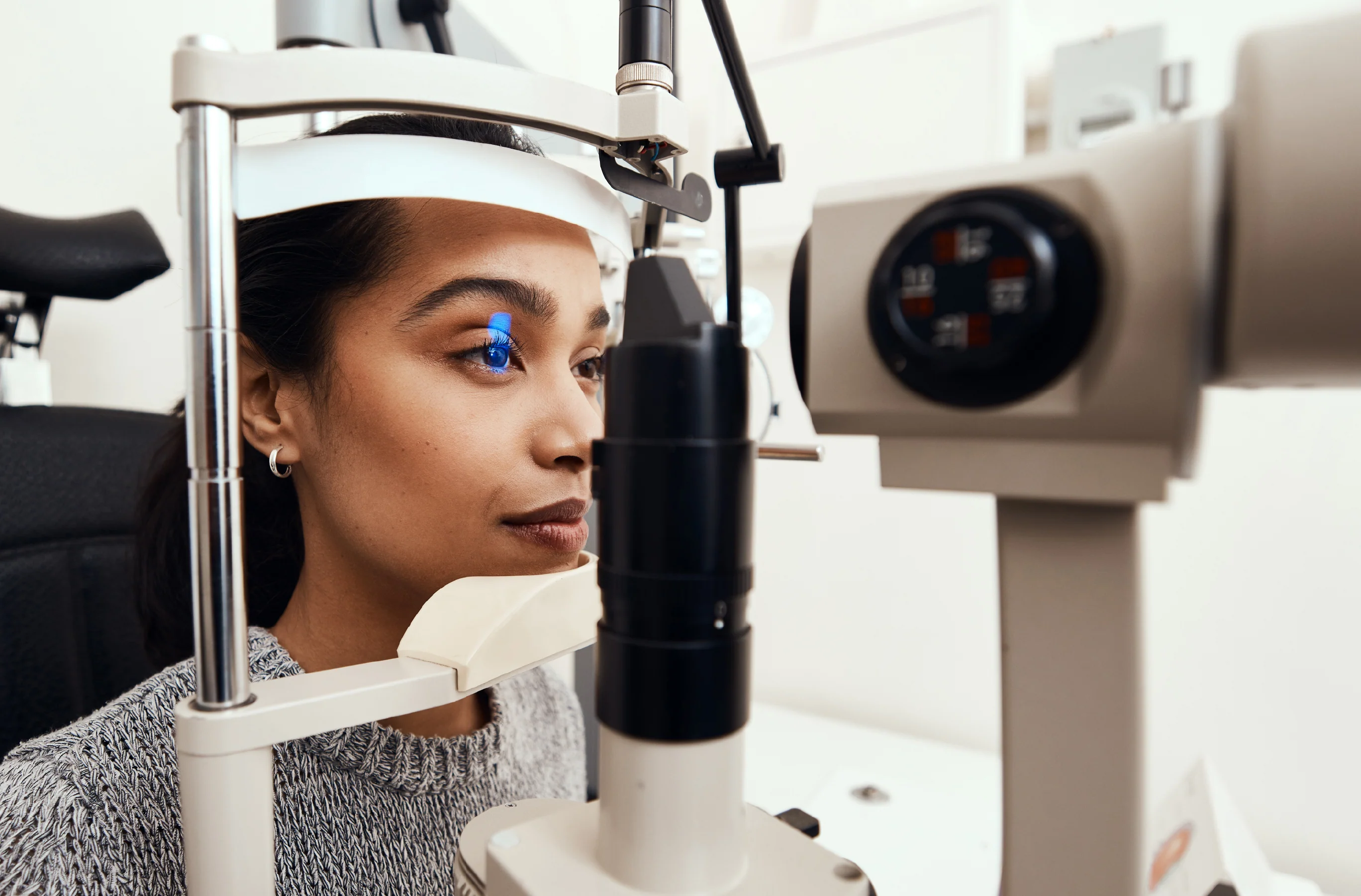
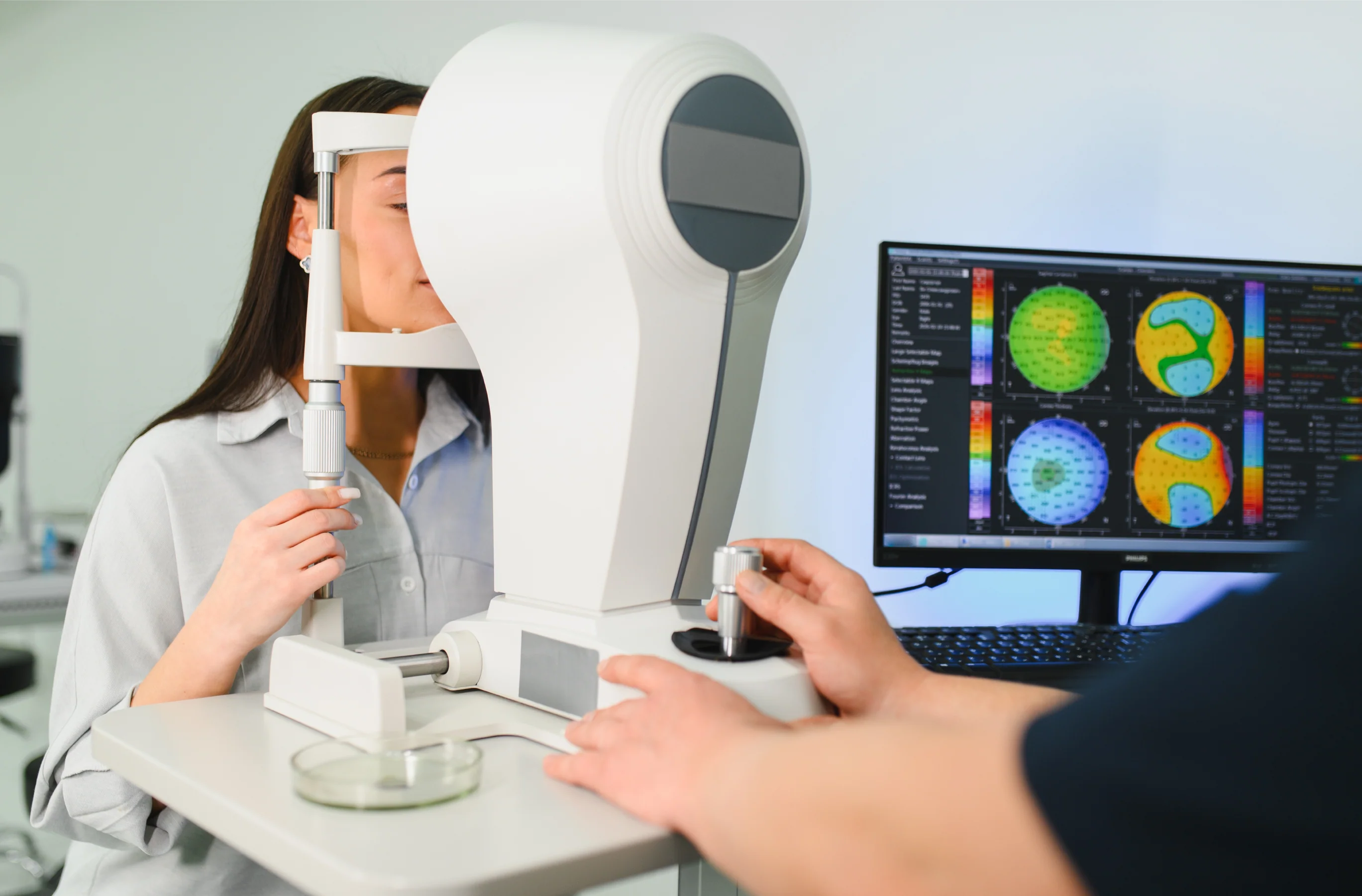
Eye imaging can document structures inside the eye, which gives an optometrist something genuinely useful: a picture to hold up against the next one.
It is one reason repeat exams stay worthwhile even when your prescription barely moves.
Often the answer is wonderfully uneventful. Eyes look healthy, prescription is stable, see you next time.
Sometimes a finding just needs watching. Sometimes it leads to more testing. And sometimes something seen during an eye exam is worth following up with another healthcare professional. The goal is not to hunt for catastrophe behind every pupil. It is to notice the changes worth noticing.


There is no single interval that fits everyone. Age, health conditions, family history, medications, existing eye conditions and what turned up last time all change how often an optometrist wants to see you.
Which makes the useful question less “how often does everybody need an eye exam” and more “when should I have mine”.
Your prescription tells you how clearly you see. A comprehensive eye exam can tell you considerably more about how your eyes are doing.

IRIS Cochrane provides eye exams, prescription eyewear, sunglasses and contact lenses for people and families in Cochrane and the surrounding area. The clinic is part of the Canadian IRIS network and is led locally by optometrists including Dr. Jason Hauck, Dr. Ravneet Grewal and Dr. Nadia Albano.

IRIS Cochrane is a local optometry and eyewear clinic serving Cochrane residents with eye exams, vision care, prescription glasses, sunglasses and contact lenses. The clinic is part of IRIS The Visual Group, a Canadian eye care brand with roots dating back to 1990. IRIS brings optometrists, opticians and ophthalmology services together under one national banner, while the Cochrane clinic offers local access to care for families, adults, children, contact lens wearers and anyone noticing changes in their vision. Public IRIS listings identify Dr. Jason Hauck as Owner and Optometrist at IRIS Cochrane, with Dr. Ravneet Grewal and Dr. Nadia Albano also connected to the Cochrane clinic.