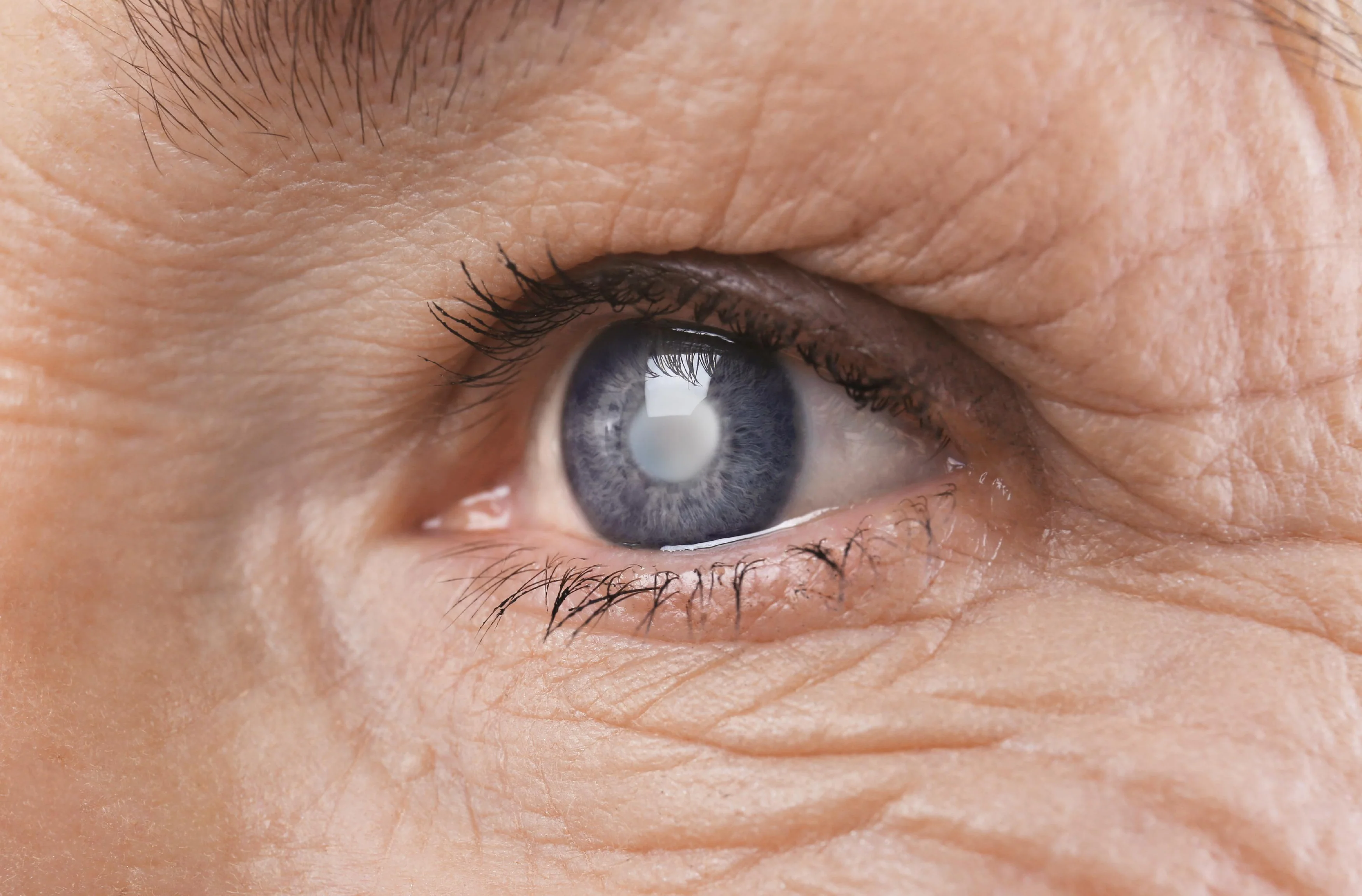
Extreme close-up of an older person's blue eye with a cloudy white area visible behind the pupil.

Are cataracts starting? The vision changes people notice first

Cataracts + Vision Changes
LOCAL BUSINESS
IRIS Cochrane
IRIS Cochrane
Brokerage
Extreme close-up of an older person's blue eye with a cloudy white area visible behind the pupil.
They rarely announce themselves. They just turn the sharpness down.
3 min read
September 2026
Photos courtesy of
IRIS Visual Group
Smart Local Read
FLU Explore Link Flag
IRIS Cochrane logo with black serif text and a teal horizontal line.
Smart Local Read
↓
IRIS Cochrane
Smart Local Read

Cataracts do not usually announce themselves.

They tend to creep in. Maybe night driving feels harsher than it used to. Colours look flatter. You updated your glasses, and things still seem slightly foggy.

Cataracts usually develop slowly, and the early changes can include hazy vision, more glare and halos, harder night driving, duller colours and more frequent prescription changes.

None of that automatically means cataracts. But when several show up together, they are worth mentioning at an eye exam.

So what isa cataract?

So what isa cataract?

Inside each eye is a clear natural lens that helps focus light.

A cataract develops when that lens gradually becomes cloudy. Because the change happens over time, the first signs are easy to dismiss.

Portrait of a woman with grey hair in a white shirt, seated in a softly lit room and looking towards the camera.
Most people meet a cataract as a slow change in what they can see, long before anyone says the word.

Everything starts looking a little less crisp

One of the most common early changes is vision that feels blurred, cloudy or simply less sharp.

You might notice it reading small print, watching television, driving, or trying to make out detail at a distance. IRIS describes it as looking through a steamed-up window.

Cataracts + Vision Changes
Smart Local Read

It feels less like I cannot see, and more like someone quietly turned downthe sharpness setting.

View from behind a steering wheel at night, with distant street lights appearing as soft, out-of-focus circles.
Not a simulation of anyone's vision. Just the closest a photograph gets to the way people describe it.

Then the headlights starthaving opinions

Glare and sensitivity to bright light often become more noticeable. Headlights, streetlights and bright sun can feel harsher than they used to, and halos can appear around light sources, particularly at night.

If halos are the thing you are noticing most, our Halos Around Lights read goes further into what causes them and when they deserve attention.

A more useful question than “can I still drive at night?” is “is driving at night noticeably harder than it was a year ago?”

Colours quietly lose some of their punch

Colours can gradually look duller, faded or slightly yellowed. Because it happens slowly, it is surprisingly easy to miss.

The world does not suddenly turn beige. It just starts inching toward a slightly sepia filter.

When your prescriptionkeeps moving

When your prescriptionkeeps moving

If you are updating your glasses more often than usual and your vision still does not feel right, say so.

Frequent prescription changes can be one clue that the natural lens is changing. Not every prescription change points to a cataract. It is the pattern that matters.

An eye-care professional holds a white occluder paddle over an older woman's eye during a vision test.
Testing one eye at a time is how a small change in one eye stops hiding behind the other.

Cataracts + Vision Changes
Smart Local Read
Close-up of an older person's blue eye, clear and in focus, with deeply lined skin around it.
One eye at a time is exactly how this one tends to show up.

Double vision in one eyeis its own thing

A cataract can sometimes cause double vision in one eye. That is called monocular double vision, and it is different from double vision involving both eyes.

Either way, new double vision deserves a proper assessment rather than an attempt to troubleshoot it with stronger glasses.

The quick self-check

If you are wondering whether your vision has actually changed, ask yourself:
  • Is night driving harder than it was a year ago?
  • Are headlights or sunlight more glaring?
  • Do colours seem duller?
  • Does everything still feel slightly hazy with your current glasses?
  • Have you needed prescription changes more often?
  • Are halos around lights becoming more noticeable?

One yes does not diagnose a cataract.The pattern is what matters.

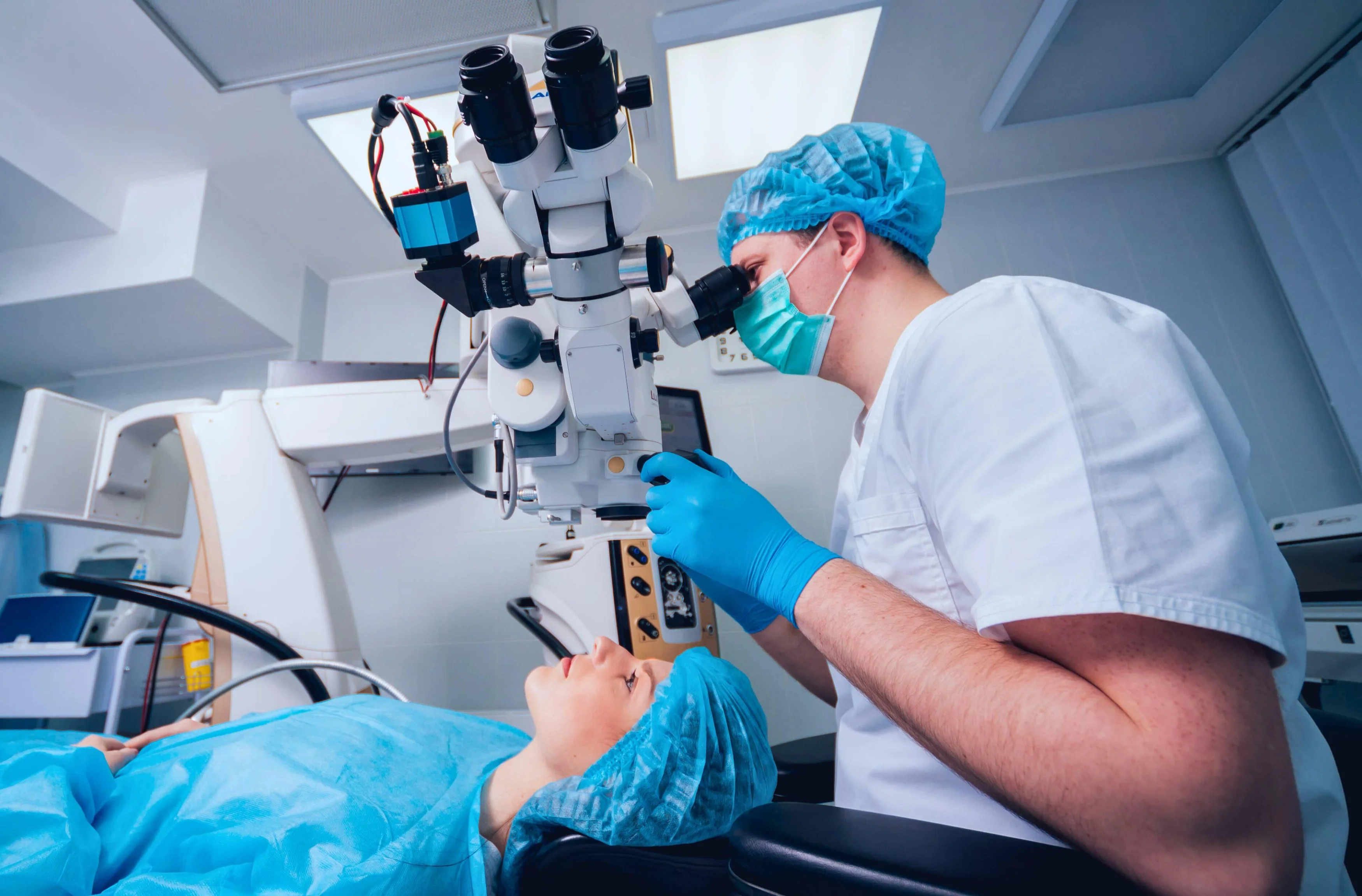
A surgeon wearing a cap and mask looks through an operating microscope at a patient lying draped in blue.
Surgery is the treatment, not the first step. Most of this story happens long before an operating room is involved.

Can cataractsbe treated?

Yes. Cataracts are commonly treated with surgery once they interfere enough with vision and everyday life.

Noticing an early symptom does not send you straight to surgery.

Cataracts + Vision Changes
Smart Local Read

What an eye examsettles

What an eye examsettles

An exam can determine whether cataracts are actually behind the changes, how much they are affecting your vision, and whether treatment is a conversation for now or for later.

An optometrist positions a phoropter in front of a seated patient during a refraction test.
This is also where a prescription change gets separated from a lens change.

When it is worth booking an eye exam

Book an appointment if you notice vision changes that are:

  • new
  • gradually worsening
  • affecting night driving
  • making reading or everyday tasks harder
  • causing more glare or halos
  • continuing despite updated glasses

An eye exam is what sorts out whether the change is coming from cataracts, your prescription, dry eye or something else.

Cataracts are common. Common is not the same thing asguess at home.

More from
IRIS Cochrane
Video tour

Take the tour.

IRIS Cochrane
Meet
IRIS Cochrane
IRIS Cochrane provides eye exams, prescription eyewear, sunglasses and contact lenses for people and families in Cochrane and the surrounding area. The clinic is part of the Canadian IRIS network and is led locally by optometrists including Dr. Jason Hauck, Dr. Ravneet Grewal and Dr. Nadia Albano.

Brokerage
This profile is for general information only and is not medical advice. For diagnosis, treatment recommendations, urgent symptoms or changes in vision, contact an optometrist or appropriate medical professional. If you experience sudden vision loss, eye injury, severe eye pain, flashes, new floaters or other urgent symptoms, seek prompt medical care.
More from
IRIS Cochrane
Meet

IRIS Cochrane

IRIS Cochrane provides eye exams, prescription eyewear, sunglasses and contact lenses for people and families in Cochrane and the surrounding area. The clinic is part of the Canadian IRIS network and is led locally by optometrists including Dr. Jason Hauck, Dr. Ravneet Grewal and Dr. Nadia Albano.

Brokerage
Real Luxury
Business Essentials →

Dr. Jason Hauck looking through optometry examination equipment at IRIS Cochrane.
Dr. Jason Hauck
IRIS Cochrane
Local Business

IRIS Cochrane

IRIS Cochrane provides eye exams, prescription eyewear, sunglasses and contact lenses for people and families in Cochrane and the surrounding area. The clinic is part of the Canadian IRIS network and is led locally by optometrists including Dr. Jason Hauck, Dr. Ravneet Grewal and Dr. Nadia Albano.

IRIS Cochrane logo with black serif text and a teal horizontal line.
What they do
Optometry
Community
Cochrane
Address
120 Fifth Avenue West, Unit 304, Cochrane, Alberta T4C 0A4
Phone
403-851-4747
Meet IRIS Cochrane →
Explore Smart Local Reads→
IRIS Cochrane

IRIS Cochrane is a local optometry and eyewear clinic serving Cochrane residents with eye exams, vision care, prescription glasses, sunglasses and contact lenses. The clinic is part of IRIS The Visual Group, a Canadian eye care brand with roots dating back to 1990. IRIS brings optometrists, opticians and ophthalmology services together under one national banner, while the Cochrane clinic offers local access to care for families, adults, children, contact lens wearers and anyone noticing changes in their vision. Public IRIS listings identify Dr. Jason Hauck as Owner and Optometrist at IRIS Cochrane, with Dr. Ravneet Grewal and Dr. Nadia Albano also connected to the Cochrane clinic.

120 Fifth Avenue West, Unit 304, Cochrane, Alberta T4C 0A4
403-851-4747iris627@iris.caWebsite

Smart Local Reads from IRIS Cochrane

Longer reads, newest first

Fresh Local Updates from IRIS Cochrane

Quick updates, newest first