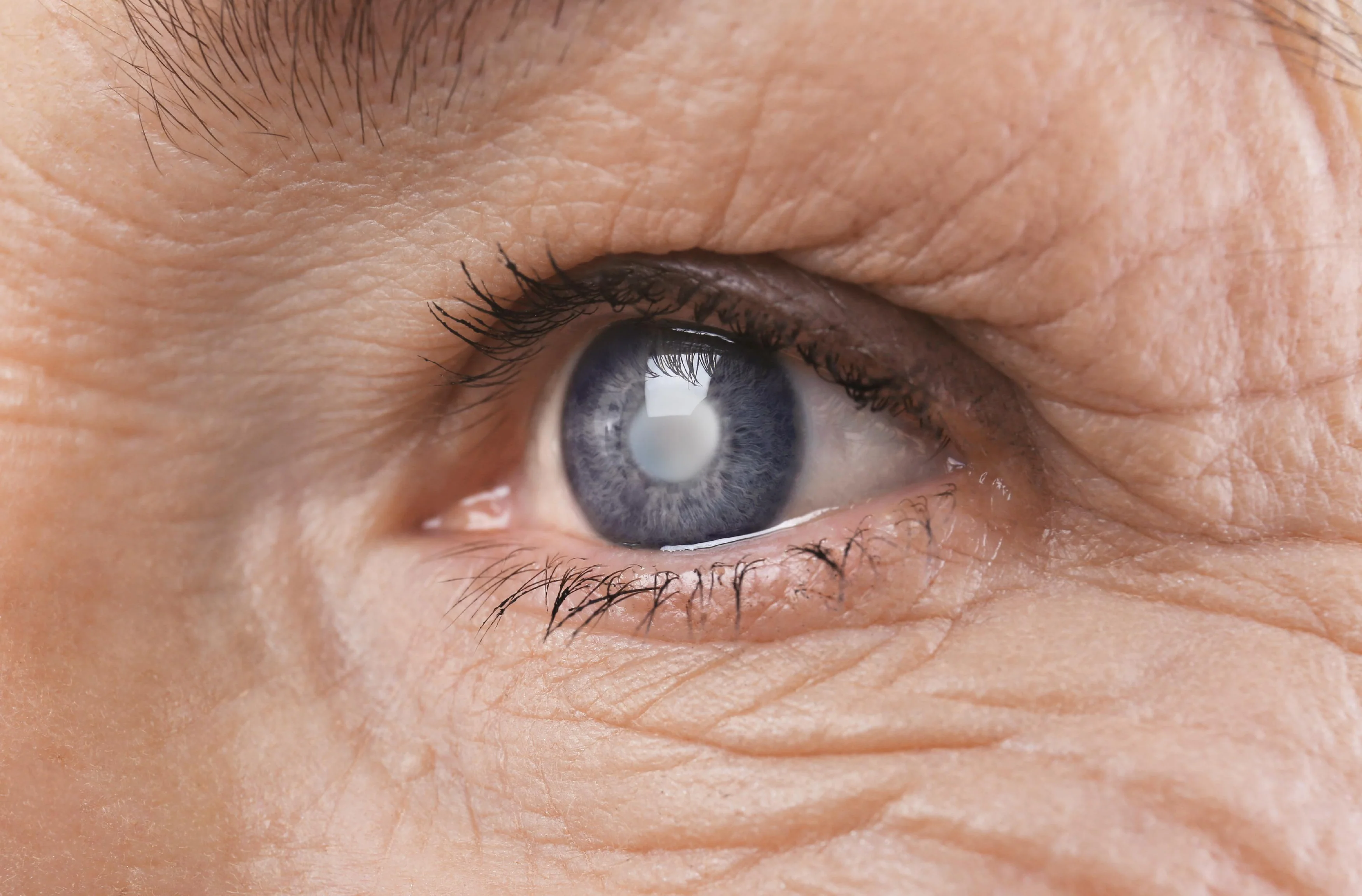


Not one thing. Refractive errors are common, presbyopia makes close focusing harder from around the forties, and in children genetics, prolonged near work and less time outdoors all influence myopia risk.
Screens can leave eyes tired and add a great deal of close-up work to the day. They are not the whole explanation, and our eyeballs have not collectively entered a state of collapse.

Most glasses correct a refractive error, which means light is not focusing exactly where it should on the retina. The common ones are myopia (nearsightedness), hyperopia (farsightedness), astigmatism and presbyopia.
Those are vision-correction problems. They are not automatically eye disease.
A long day of screens or other close work can leave eyes tired, dry or blurry, and it can bring on headaches. That is digital eye strain, and the symptoms usually settle once you stop.
It is not the same thing as permanent nearsightedness. Whether blue-light glasses help with any of it is a separate question.

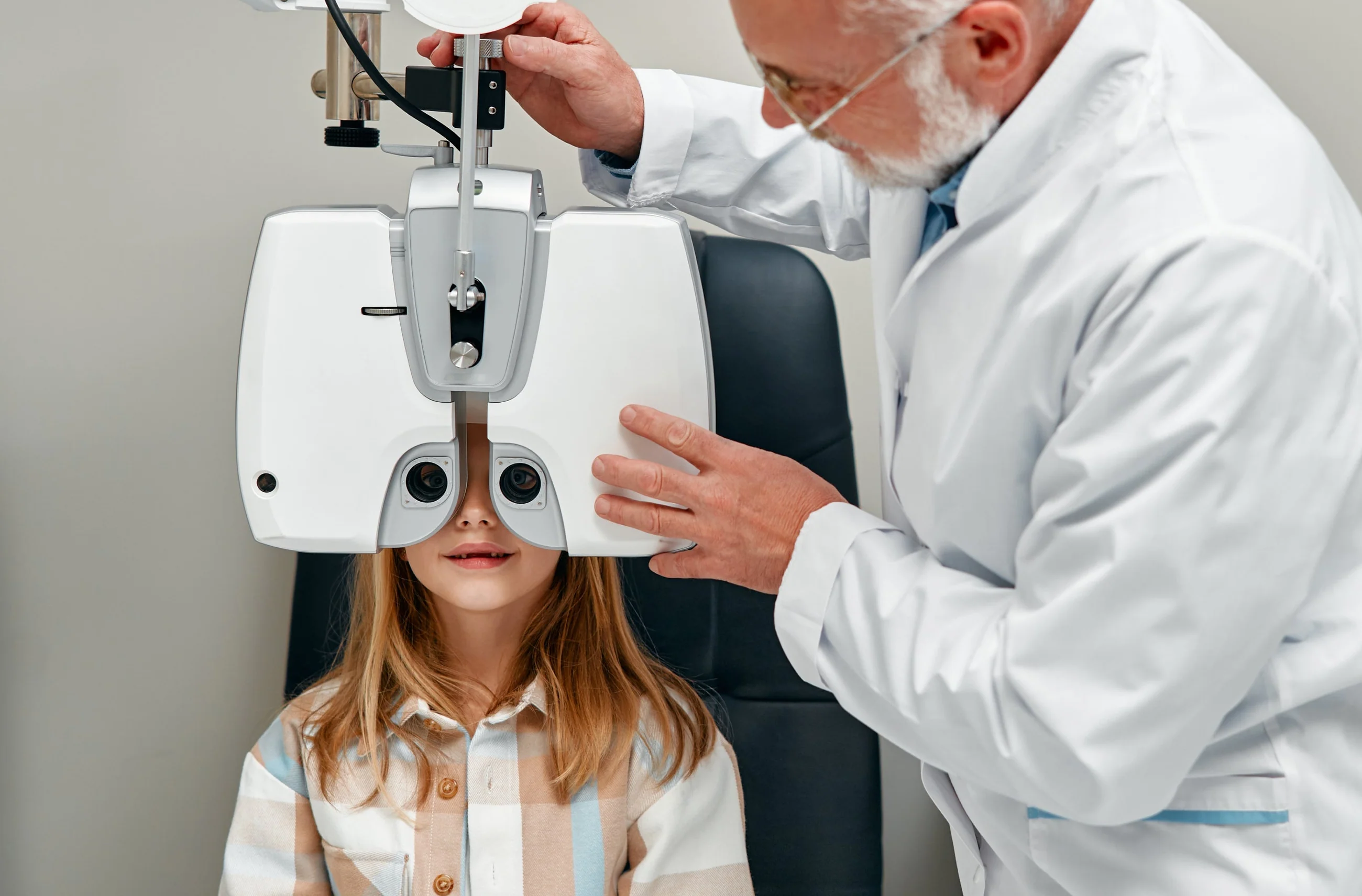
Myopia is becoming more common in children, and it tends to progress while the eye is still growing. The factors associated with it include genetics, prolonged near work, more screen time and less time outdoors.
So the useful equation is not screens equals glasses. It is developing eyes, plus a lot of near work, plus less outdoor time, plus family history. That combination is worth paying attention to, and childhood myopia has a story of its own.
More time outdoors has been associated with a lower risk of children developing myopia, and outdoor time is now a standard part of myopia-management advice. Roughly an hour a day is the usual suggestion.
It does not mean sunshine reverses nearsightedness. It means the environment a child's eyes grow up in appears to matter.
Somewhere in the forties the lens inside the eye becomes less flexible and close focusing gets harder. That is presbyopia, and it is not optional.
Your phone moves farther away. Then the menu. Then the medication instructions apparently designed for people with microscope access.
Reading glasses, progressives and multifocal contacts take it from there.

Children with nearsighted parents are generally at greater risk of becoming nearsighted themselves. Lifestyle shifts that risk, particularly the balance between outdoor time and near work, but family history is part of the equation.
Which is why two children can spend similar amounts of time on tablets and end up with very different prescriptions. Eyes remain stubbornly uninterested in behaving like a controlled experiment.

There is a far less dramatic reason you see more glasses: we are better at finding correctable vision problems.
Someone who spent years squinting at road signs, sitting closer to the television or assuming headaches were simply part of life may discover there is a prescription that makes everything sharper. The glasses did not create the problem. They showed how much clearer it could be.
Not necessarily. Myopia can progress while the eye is growing, presbyopia changes with age, and astigmatism and other refractive errors shift over time.
A noticeable change can occasionally be linked to another eye or health issue, which is why a significant or unexpected one is worth raising at an eye exam. Ordering progressively stronger mystery glasses online and hoping for the best remains a fairly weak diagnostic strategy.

For adults: squinting more, struggling to see at night, headaches during close work, holding reading material farther away, or a prescription that no longer feels right.
For parents: sitting unusually close to screens, holding things right up to the face, squinting at distant objects, or trouble seeing the board at school.
And yes, get the kids outside.

IRIS Cochrane provides eye exams, prescription eyewear, sunglasses and contact lenses for people and families in Cochrane and the surrounding area. The clinic is part of the Canadian IRIS network and is led locally by optometrists including Dr. Jason Hauck, Dr. Ravneet Grewal and Dr. Nadia Albano.

IRIS Cochrane is a local optometry and eyewear clinic serving Cochrane residents with eye exams, vision care, prescription glasses, sunglasses and contact lenses. The clinic is part of IRIS The Visual Group, a Canadian eye care brand with roots dating back to 1990. IRIS brings optometrists, opticians and ophthalmology services together under one national banner, while the Cochrane clinic offers local access to care for families, adults, children, contact lens wearers and anyone noticing changes in their vision. Public IRIS listings identify Dr. Jason Hauck as Owner and Optometrist at IRIS Cochrane, with Dr. Ravneet Grewal and Dr. Nadia Albano also connected to the Cochrane clinic.