


If you have diabetes, your eyes can be affected before your vision gives you much reason to complain.
That is part of what makes diabetic eye disease easy to underestimate.
You may still be reading, driving and seeing clearly while changes are beginning in the tiny blood vessels at the back of the eye. Diabetic retinopathy often develops without noticeable symptoms in its early stages, which is why regular eye examinations are an important part of diabetes care.
The retina is the light-sensitive tissue at the back of your eye.
Over time, elevated blood sugar can damage the small blood vessels that supply it. Those vessels can weaken, swell or leak fluid and blood. In more advanced disease, abnormal new blood vessels can also develop.
That condition is called diabetic retinopathy.

Early on, possibly nothing.
As diabetic retinopathy progresses, vision changes can include:
IRIS also notes that diabetes increases the risk of other eye problems, including diabetic macular edema, glaucoma and cataracts.
Which means “my eyesight seems fine” is reassuring, but it is not a retinal health test.
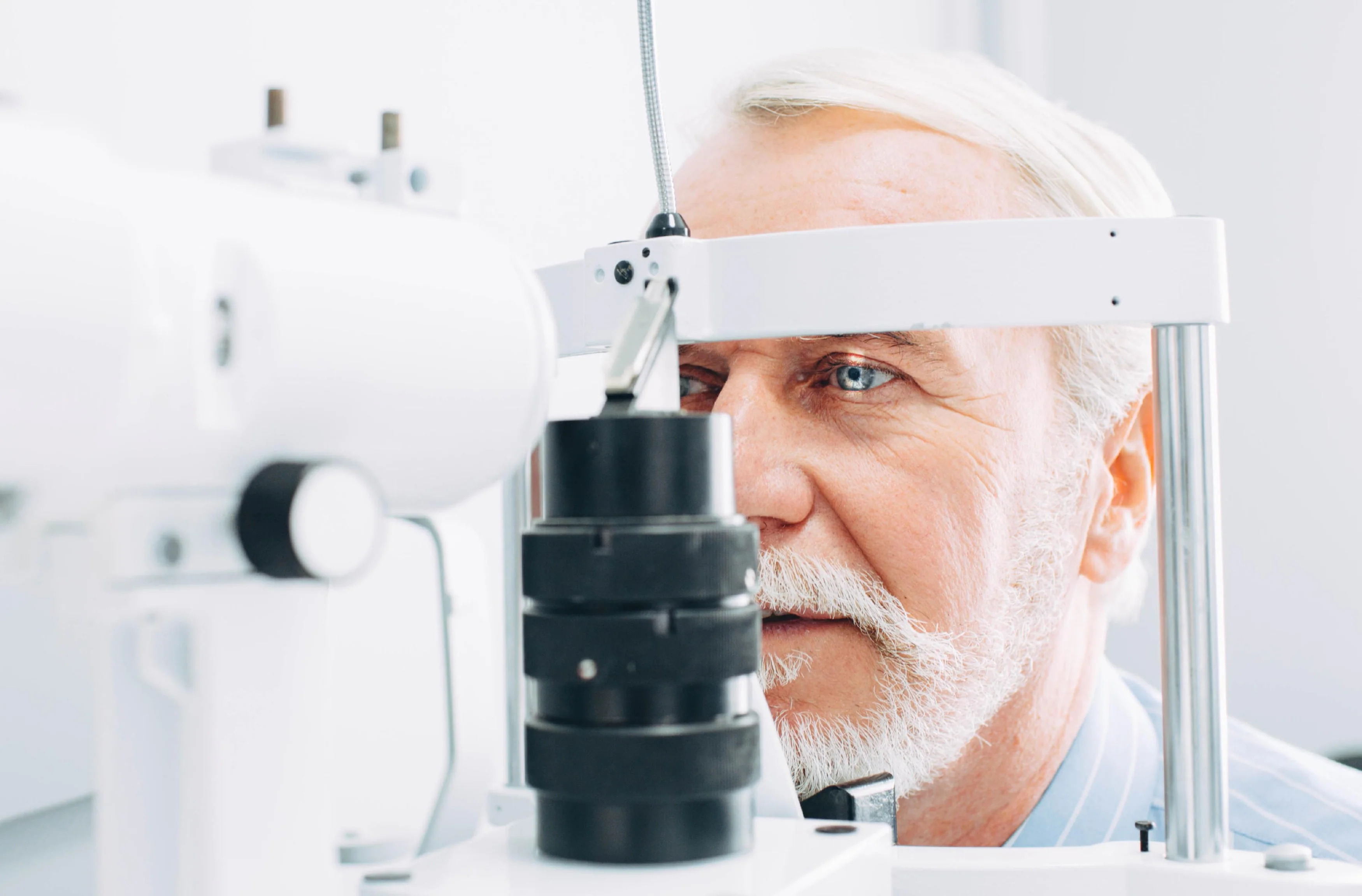
Because an eye-care professional can examine the retina directly.
During diabetic eye screening, they are looking for changes in the retinal blood vessels before those changes necessarily become obvious to you.
Screening can involve a retinal examination in person, retinal photography or other imaging, depending on the patient and the type of examination.
This is where the distinction matters.
An optometrist may see retinal changes that are consistent with diabetes or another vascular problem and recommend medical follow-up.
But an eye exam is not a substitute for the blood testing used to diagnose diabetes.
So the useful claim is not “your optometrist can diagnose diabetes before your doctor.”
It is that your eyes can sometimes show changes associated with diabetes, and those findings can be an important reason for follow-up.
Much less dramatic. Much more useful.
Then retinal screening becomes part of managing the condition, not something to wait for until your eyesight changes.
Diabetes Canada says diabetic retinopathy can go unnoticed until vision loss occurs, and recommends regular comprehensive retinal screening.
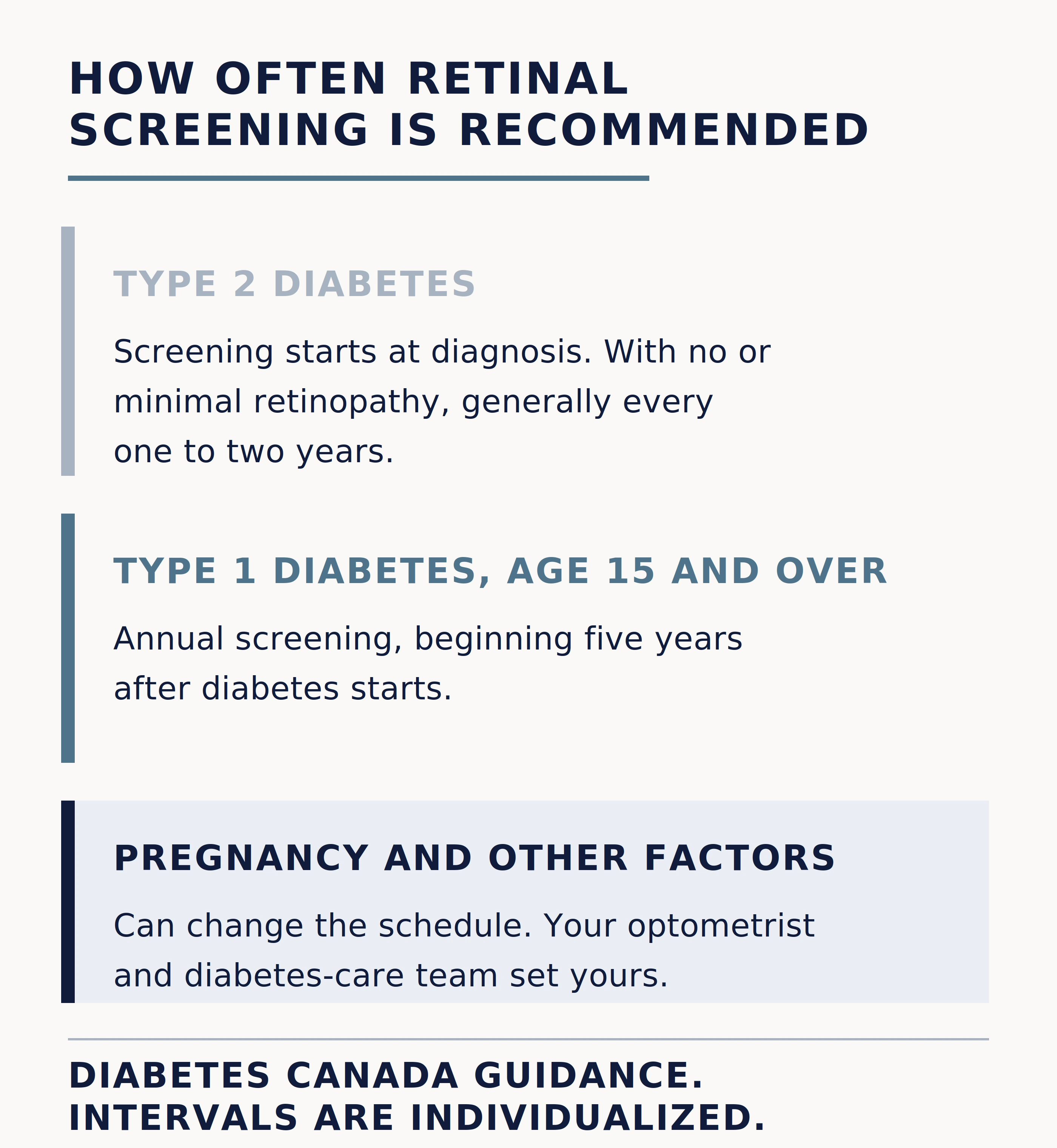
For adults with type 2 diabetes, screening starts at diagnosis. If there is no or minimal retinopathy, follow-up is generally every one to two years. For people age 15 or older with type 1 diabetes, current guidance recommends annual screening beginning five years after diabetes starts. Pregnancy and other factors can change the schedule.
Your optometrist and diabetes-care team can tell you what applies to you.
Diabetic eye disease is not simply something that happens while everyone watches helplessly.
Diabetes Canada says maintaining good blood-sugar and blood-pressure control helps reduce the onset and progression of sight-threatening diabetic retinopathy, and advises keeping blood sugar, blood pressure and cholesterol within a healthy range.
In practical terms: manage the diabetes, keep the eye exams, and do not wait for the retina to send a strongly worded memo.
If you have diabetes and notice a sudden or significant vision change, do not wait until your next routine appointment.
Diabetes Canada advises seeing an eye doctor immediately for blurred vision, flashes of light, sudden vision loss, or blotches or spots in your vision.
Those symptoms can have more than one cause, which is exactly why they deserve proper assessment rather than a home diagnosis.

Diabetes can affect the retina before you notice a problem with your vision.
That does not mean every person with diabetes will develop serious eye disease. It means feeling like you can see perfectly well is not a reason to skip the retinal screening recommended for you.


IRIS Cochrane provides eye exams, prescription eyewear, sunglasses and contact lenses for people and families in Cochrane and the surrounding area. The clinic is part of the Canadian IRIS network and is led locally by optometrists including Dr. Jason Hauck, Dr. Ravneet Grewal and Dr. Nadia Albano.

IRIS Cochrane is a local optometry and eyewear clinic serving Cochrane residents with eye exams, vision care, prescription glasses, sunglasses and contact lenses. The clinic is part of IRIS The Visual Group, a Canadian eye care brand with roots dating back to 1990. IRIS brings optometrists, opticians and ophthalmology services together under one national banner, while the Cochrane clinic offers local access to care for families, adults, children, contact lens wearers and anyone noticing changes in their vision. Public IRIS listings identify Dr. Jason Hauck as Owner and Optometrist at IRIS Cochrane, with Dr. Ravneet Grewal and Dr. Nadia Albano also connected to the Cochrane clinic.