
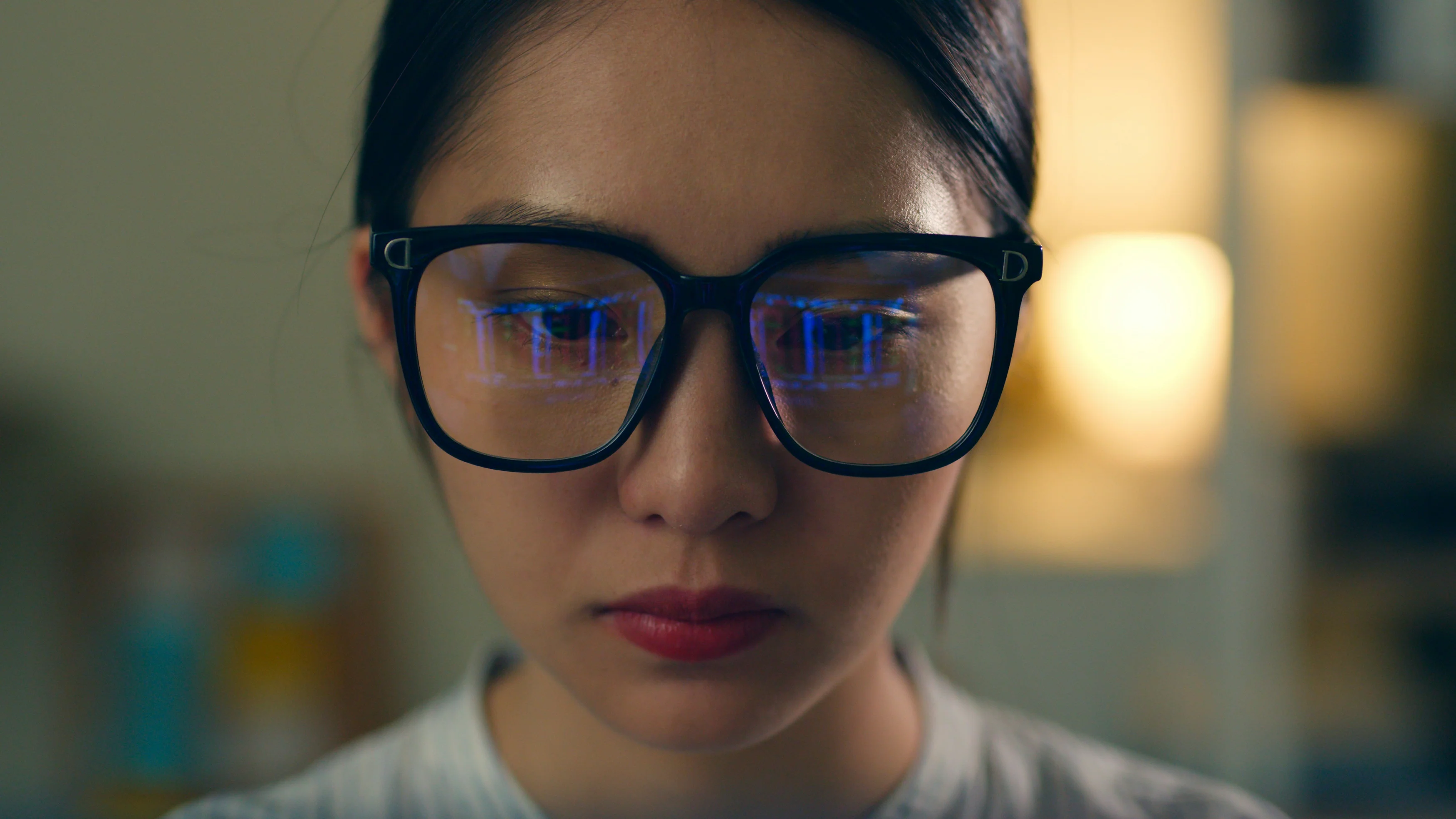

Blue-light glasses have become one of those things that somehow migrated from optometry into everyday life.
They’re at eyewear shops. They’re online. They’re marketed to office workers, gamers, students and anyone whose weekly screen-time report feels slightly accusatory.
And the promise is appealing: put on a pair of glasses, filter some blue light, and maybe your eyes will feel better.
But if your eyes are tired after a day of screens, blue light may not be the main problem at all.
Blue light is part of the visible light spectrum.
The biggest natural source is the sun, but phones, tablets, computers, televisions and LED lighting also emit it.
That is where the conversation gets a little tangled.
Screen use absolutely can leave your eyes feeling tired, dry or irritated. But that doesn’t automatically mean the blue light coming from the screen is what caused the problem.
IRIS describes digital eye strain, sometimes called computer vision syndrome, as a group of symptoms associated with prolonged screen use, including blurred vision, dry or irritated eyes, headaches, light sensitivity and neck or shoulder discomfort.
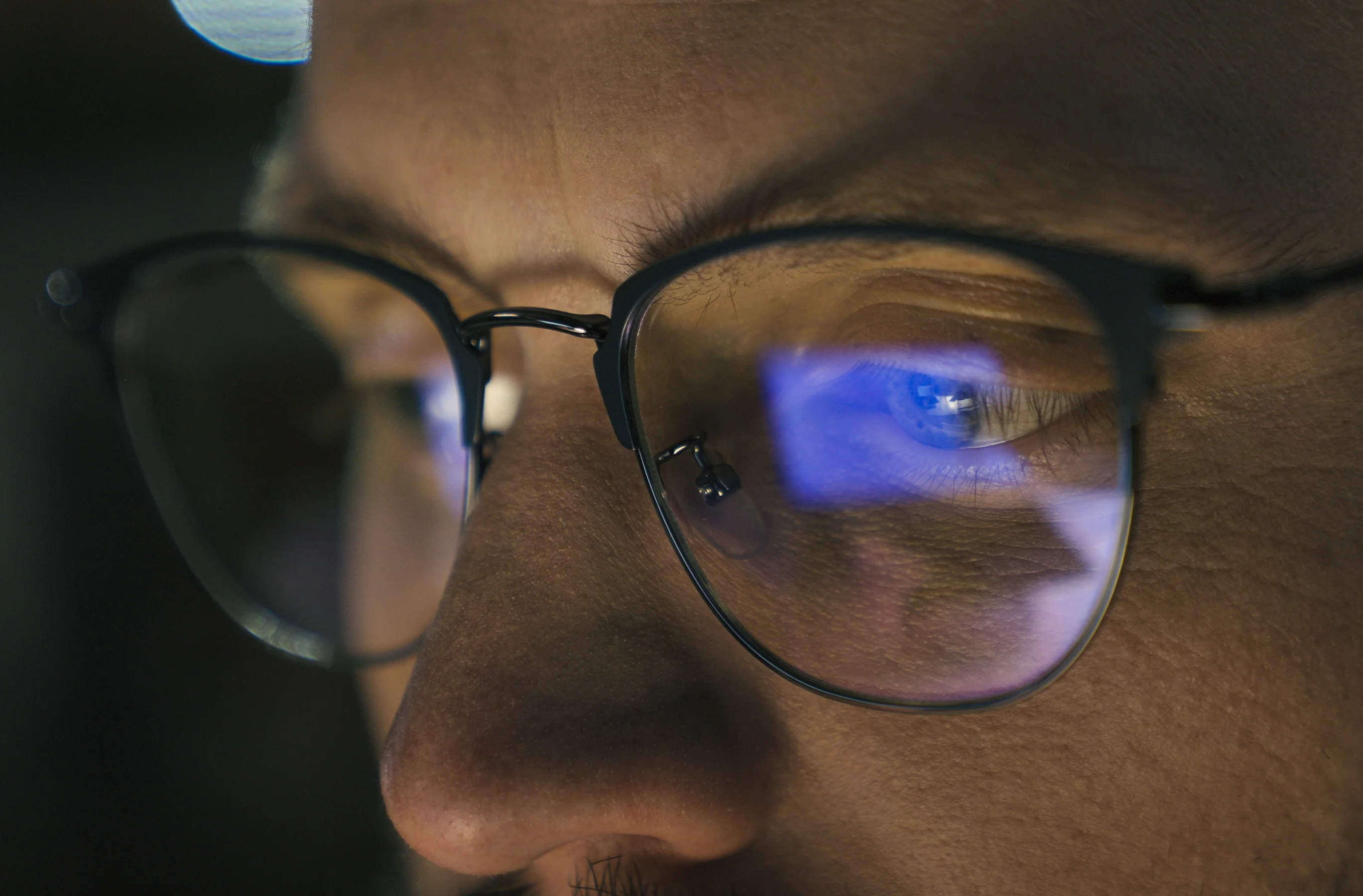

A few things are happening at once.
When we concentrate on a screen, we blink less. That means the surface of the eye can dry out more quickly.
Our eyes are also doing sustained close-up work for long periods without much opportunity to change focus.
Then add screen glare, lighting, viewing distance and the posture you slowly evolved into somewhere around hour four of the workday.
The result can be digital eye strain even if blue light itself is not the villain of the story.
The most useful answer is:
Sometimes they may make screens feel more comfortable, but they are not a magic shield against digital eye strain.
IRIS says blue-light-filtering glasses are not necessary for everyone, but some people who spend long periods in front of screens may find them helpful for visual comfort. Anti-reflective treatments can also help reduce distracting reflections and glare.
That is different from saying everyone who owns a laptop needs a special pair of glasses.
It also means buying blue-light glasses while ignoring everything else about how you use your screens is a little like buying excellent windshield wipers when the real problem is that you’ve been driving for nine hours without stopping.

If your eyes are staging a small rebellion by the end of the day, start with the boring things that actually matter.
Give your eyes somewhere else to look.
The 20-20-20 rule is simple: every 20 minutes, look about 20 feet away for 20 seconds.
Blink. Seriously.
People tend to blink less while concentrating on screens, which contributes to dryness.
Move the screen.
IRIS recommends keeping it roughly an arm’s length away and slightly below eye level.
Deal with glare.
Adjust lighting, screen brightness and reflections instead of making your eyes fight the room all day.
Check your prescription.
Even a small uncorrected prescription issue can make sustained computer work more tiring.
Digital eye strain is not exclusively an eyeball problem.
If you find yourself rubbing your neck, leaning toward the monitor or slowly becoming one with your laptop, your workstation may be contributing too.
IRIS includes neck and shoulder pain among the symptoms associated with prolonged screen use.
Which brings us to one of the less glamorous truths about screen comfort:
Sometimes the answer is better glasses.
Sometimes it’s eye drops or treating dry eye.
Sometimes it’s changing your prescription.
And sometimes it’s moving your monitor six inches and sitting like a recognizable human again.

If screen discomfort keeps happening despite changing your habits, or you’re regularly dealing with blurred vision, headaches, burning, dryness or difficulty focusing, it’s worth mentioning at an eye exam.
An optometrist can check whether your prescription has changed and whether dry eye, focusing problems or another vision issue is contributing to the symptoms.
That makes the question less:
“Should I buy blue-light glasses?”
and more:
“Why are my eyes uncomfortable in the first place?”
That is usually the more useful question.
If blue-light filtering or computer glasses make sense for how you work, the team at IRIS Cochrane can help you look at those options.
But the bigger advantage of having the conversation during an eye exam is that you’re not choosing a solution before you know the problem.
Your screen setup, prescription, dryness, glare, work habits and how many hours you spend staring at things approximately 18 inches from your face all matter.
IRIS Optometrists and Opticians, Cochrane
120 Fifth Avenue, Unit 304
Cochrane, AB
403-851-4747

IRIS Cochrane provides eye exams, prescription eyewear, sunglasses and contact lenses for people and families in Cochrane and the surrounding area. The clinic is part of the Canadian IRIS network and is led locally by optometrists including Dr. Jason Hauck, Dr. Ravneet Grewal and Dr. Nadia Albano.

IRIS Cochrane is a local optometry and eyewear clinic serving Cochrane residents with eye exams, vision care, prescription glasses, sunglasses and contact lenses. The clinic is part of IRIS The Visual Group, a Canadian eye care brand with roots dating back to 1990. IRIS brings optometrists, opticians and ophthalmology services together under one national banner, while the Cochrane clinic offers local access to care for families, adults, children, contact lens wearers and anyone noticing changes in their vision. Public IRIS listings identify Dr. Jason Hauck as Owner and Optometrist at IRIS Cochrane, with Dr. Ravneet Grewal and Dr. Nadia Albano also connected to the Cochrane clinic.