


Often, yes. Fog, rain, tired eyes at the end of a long day, a smudge on a lens: any of these can put a soft ring around a streetlight, and any of them can clear on their own.
What changes the answer is the pattern. Halos that are new for you, that keep coming back, or that are getting worse are worth an eye exam. Halos that arrive with pain or a sudden change in vision are worth attention the same day.

It is the one part of the day spent looking straight at small, bright light sources in the dark. Headlights, streetlamps, brake lights. If something in the eye is scattering light, night driving is usually where it shows up first.
A circle or ring of light around a light source. Sometimes a soft glow, sometimes a defined ring, sometimes a starburst reaching outward. It appears around headlights, streetlamps and indoor lighting, and it is usually more obvious at night, when the pupil is wider and there is less competing light.
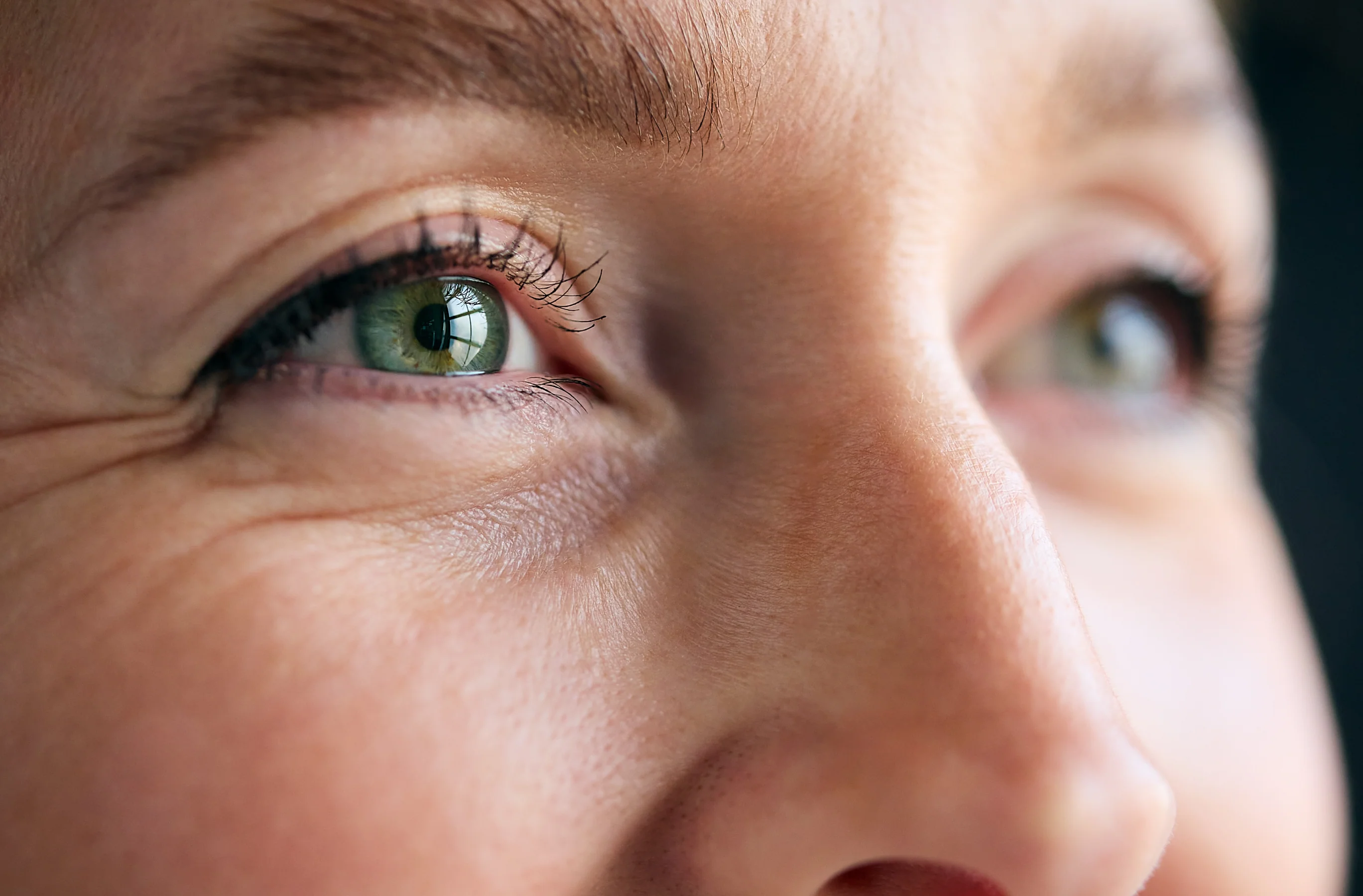

Light passes through the cornea and the lens before it reaches the back of the eye. When those surfaces are clear and even, a point of light stays a point. When something changes how they bend or transmit light, part of it spreads, and the point picks up a ring.
That is the whole mechanism. What matters is the reason the light is scattering.
Weather. Humidity, rain, fog and airborne particles scatter light before it ever reaches the eye.
Tired eyes. A long stretch of screen time or reading can temporarily affect how clearly you are seeing.
Glasses and contact lenses. Dirty, scratched or poorly fitting lenses bend light in ways they were not meant to.
Healing after eye surgery. Halos are a recognised part of recovery from laser vision correction and lens procedures.
None of these is a diagnosis. They are the possibilities an optometrist works through first.

Not everyone describes it the same way. Some people see a soft glow, some see a clean ring, some see a starburst reaching out from the light. Any of those descriptions is useful to bring to an exam.
Do the halos improve after a night's sleep?
Do they improve after you clean your glasses, or change or remove your contacts?
Do they only turn up in fog or rain?
Has anything else about your vision changed?
Three yeses and a no point toward something temporary. They do not prove it, and it is still worth mentioning at your next exam.
Cataracts. Clouding of the eye's natural lens, often more noticeable at night.
Glaucoma. Halos can appear coloured, and may come with eye pain or headaches.
Keratoconus. The cornea thins and changes shape, which distorts vision.
Corneal edema. Swelling of the cornea, often alongside discomfort and light sensitivity.
Severe dry eye. A poor tear film can cause blur and halos that come and go, particularly in low light.
Each of those is its own conversation. The point here is only that halos are one of the things that can point toward them.

An exam can look at the cornea, the lens, the tear film and the pressure inside the eye, and separate a temporary explanation from one that needs treatment or monitoring. It also sets a baseline, so the next change has something to be measured against.

Book an eye exam and describe what you are actually seeing: when it happens, what shape it takes, whether it is new, and whether anything else has changed. That description does a lot of the work before anyone looks into your eyes.

IRIS Cochrane provides eye exams, prescription eyewear, sunglasses and contact lenses for people and families in Cochrane and the surrounding area. The clinic is part of the Canadian IRIS network and is led locally by optometrists including Dr. Jason Hauck, Dr. Ravneet Grewal and Dr. Nadia Albano.

IRIS Cochrane is a local optometry and eyewear clinic serving Cochrane residents with eye exams, vision care, prescription glasses, sunglasses and contact lenses. The clinic is part of IRIS The Visual Group, a Canadian eye care brand with roots dating back to 1990. IRIS brings optometrists, opticians and ophthalmology services together under one national banner, while the Cochrane clinic offers local access to care for families, adults, children, contact lens wearers and anyone noticing changes in their vision. Public IRIS listings identify Dr. Jason Hauck as Owner and Optometrist at IRIS Cochrane, with Dr. Ravneet Grewal and Dr. Nadia Albano also connected to the Cochrane clinic.