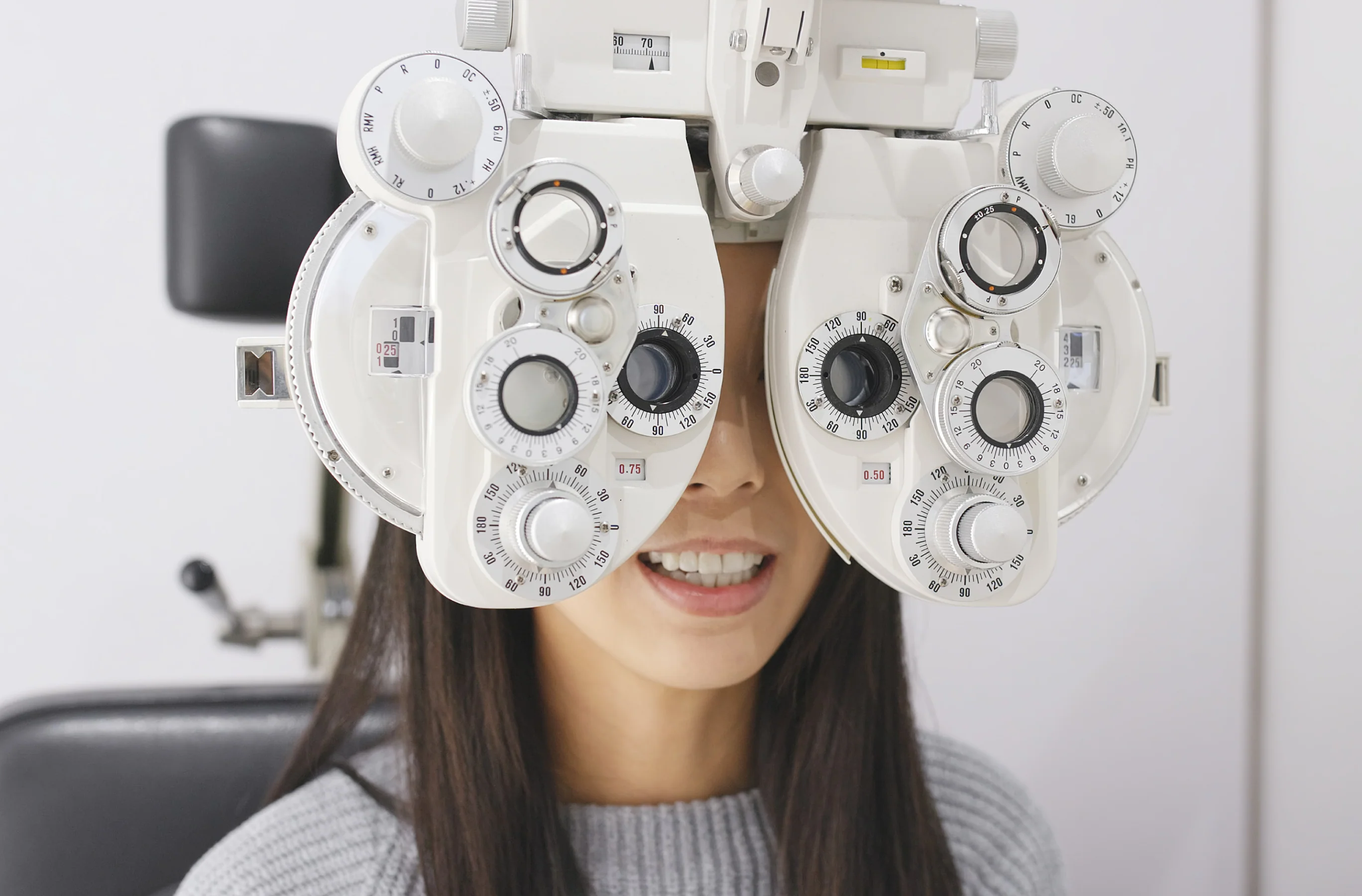
Smiling woman adjusting a pair of round black glasses during an eyewear appointment.

What do our eyes really say about us?

Eye Health
LOCAL BUSINESS
IRIS Cochrane
IRIS Cochrane
Brokerage
Smiling woman adjusting a pair of round black glasses during an eyewear appointment.
More than whether you need glasses, apparently.
3 min read
August 2026
Photos courtesy of
IRIS Visual Group
Smart Local Read
FLU Explore Link Flag
IRIS Cochrane logo with black serif text and a teal horizontal line.
Smart Local Read
↓
IRIS Cochrane
Smart Local Read

Your eyes are doing more than helping you find your keys.

We tend to think of an eye exam as the appointment where somebody tells us whether the tiny letters are still tiny.

That tracks.

But your eyes carry quite a bit more information than that.

A comprehensive eye exam looks at how clearly you see, how your eyes work together, and the health of structures including the cornea, lens, retina and optic nerve.

Your optometrist can also examine the blood vessels at the back of the eye, which can sometimes show changes associated with conditions elsewhere in the body.

So no, your eyes are not tiny crystal balls.

But they can be surprisingly informative.

They can say:“Everything looks fine.” Even when something is starting.

They can say:“Everything looks fine.”Even when something is starting.

This is one of the stranger things about eye health.

You can see well and still have an eye condition developing quietly.

Some eye conditions can progress without obvious symptoms in their early stages.

That is one reason regular eye exams matter even when nothing seems wrong.
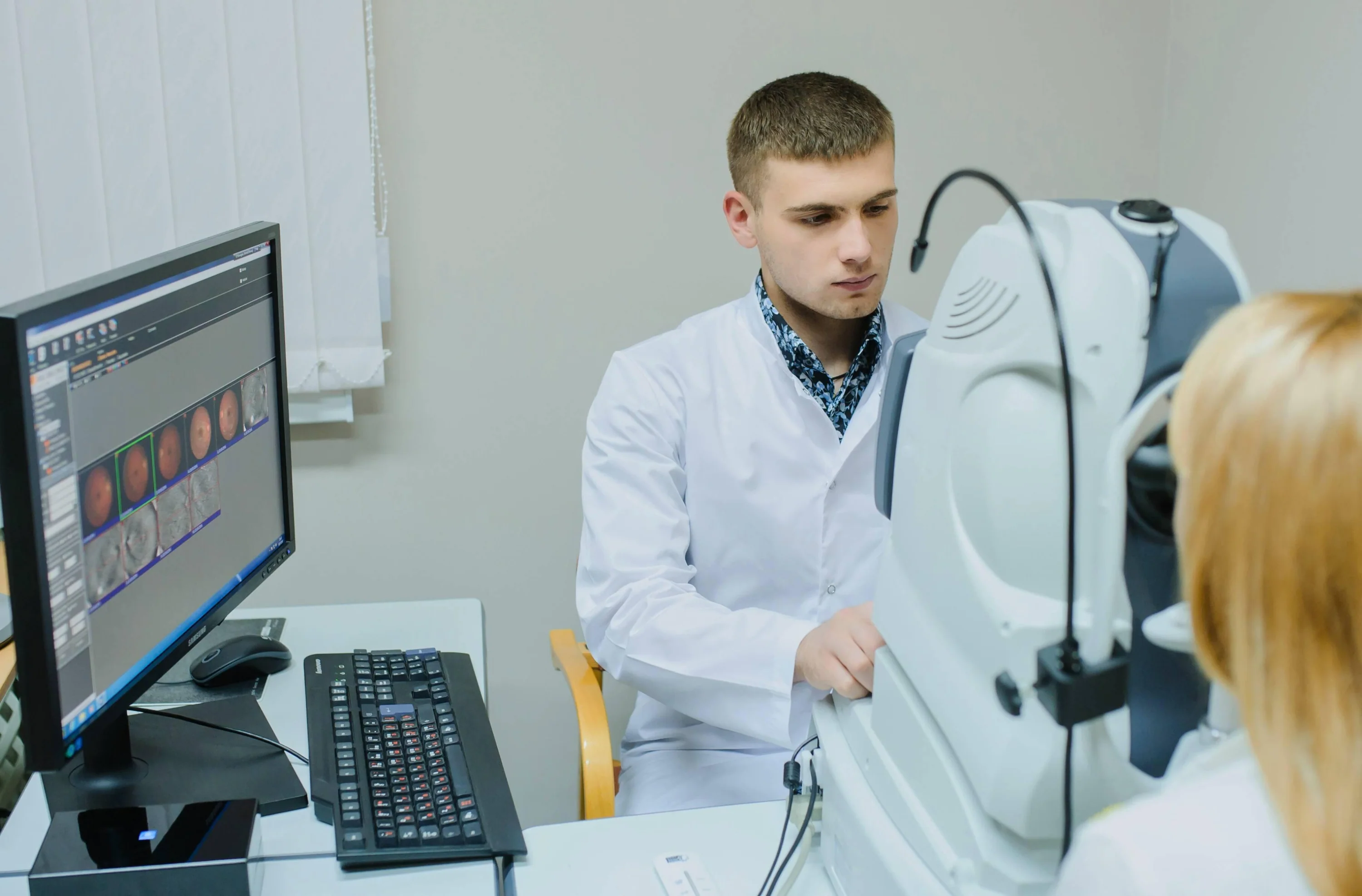
Eye-care professional operating retinal imaging equipment while a patient sits at the machine.
A comprehensive eye exam can include imaging that gives an optometrist a closer look at structures at the back of the eye.

Clear vision and healthy eyes are related. They are not exactly the same thing.

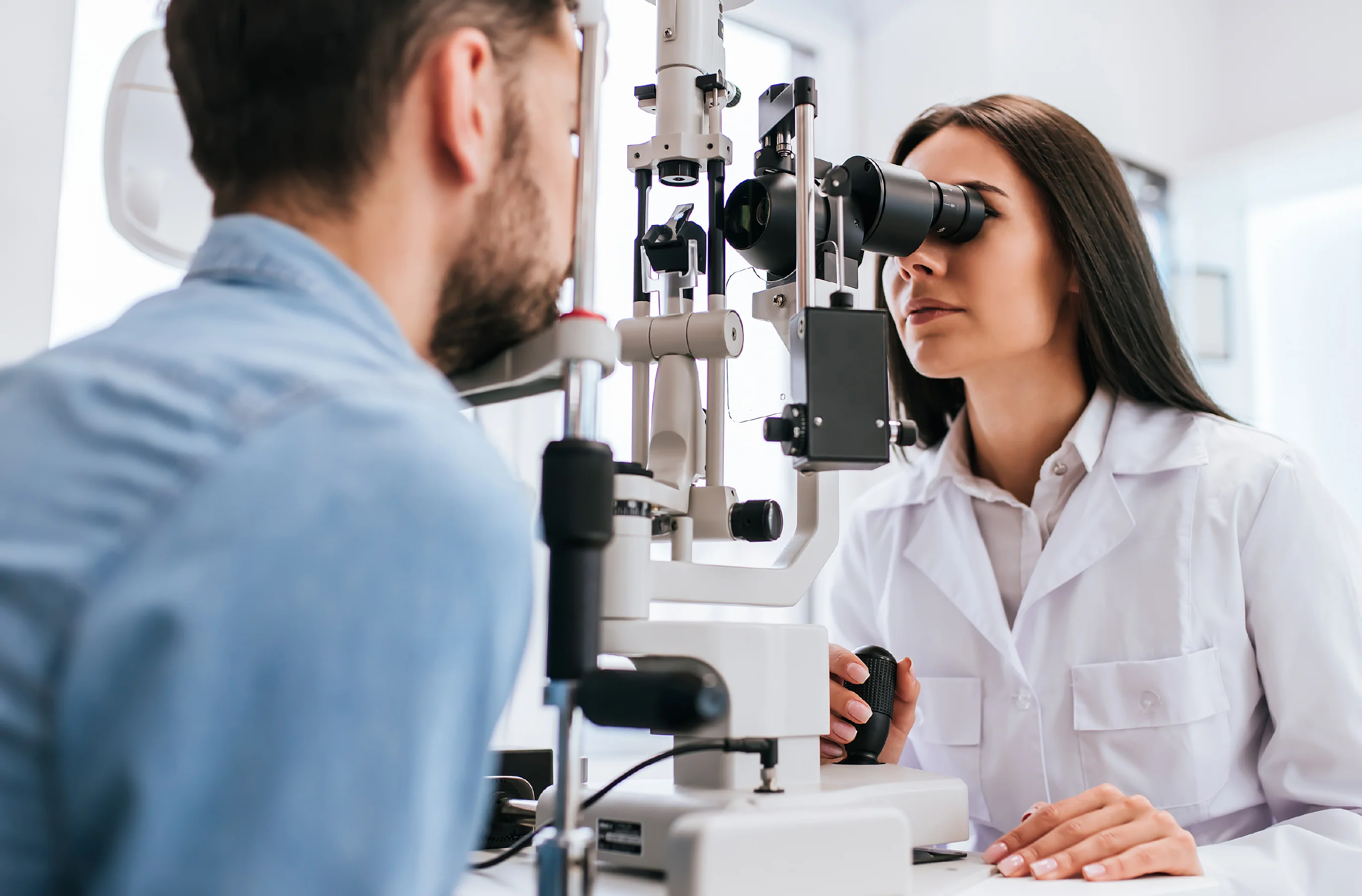
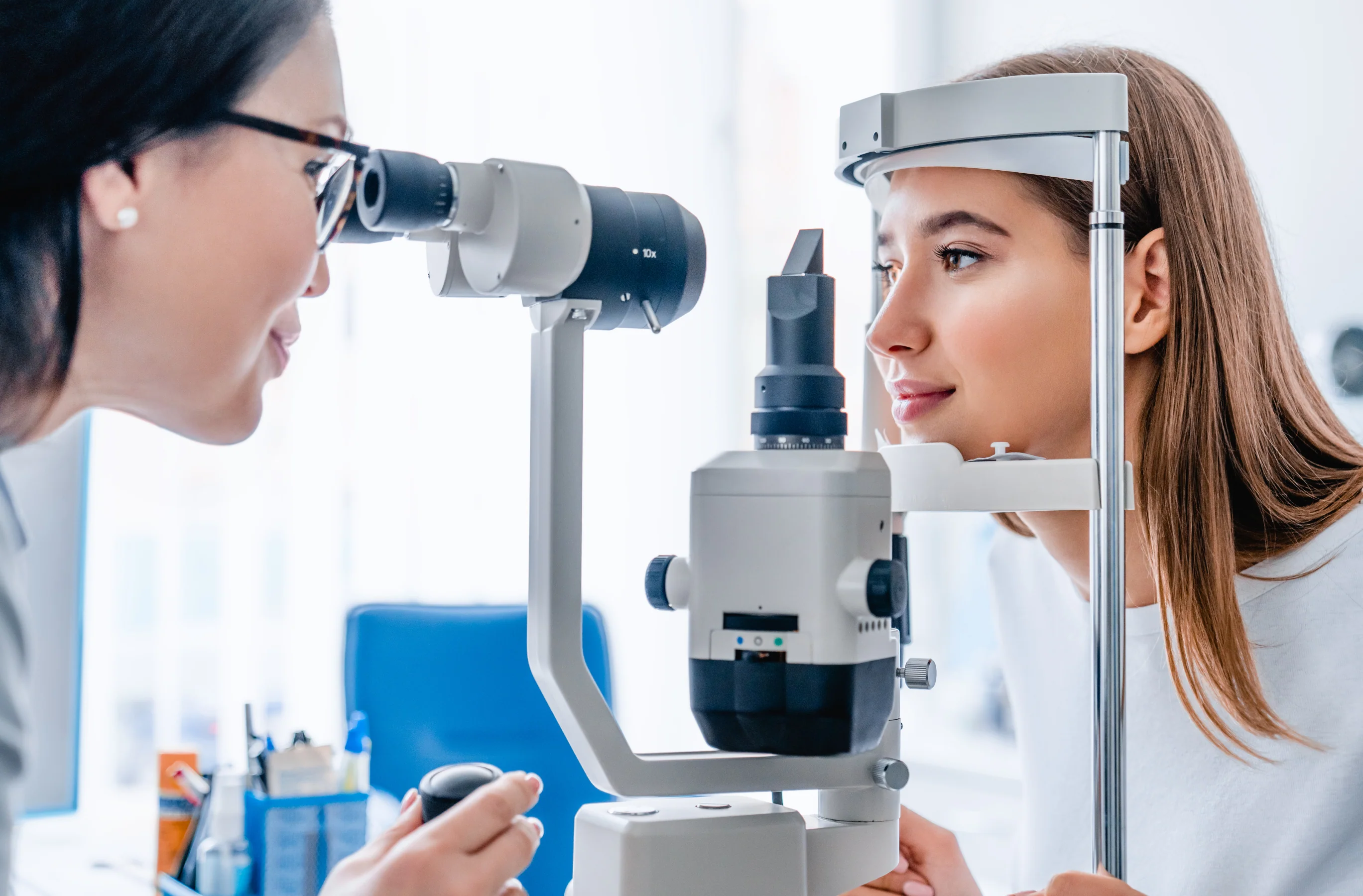
Eye-care professional examining a patient with a slit lamp microscope.
An eye exam looks at more than the letters on the chart, including the health of structures at the front and inside of the eye.

They can say something aboutthe rest of you,too.

The retina gives an optometrist a direct view of small blood vessels.

Changes there can sometimes be associated with broader health issues, including diabetes and high blood pressure.

An eye exam does not replace a blood-pressure check, bloodwork or a medical diagnosis.

But findings in the eye can sometimes be a reason to recommend further medical follow-up.

That makes an eye exam a little less “Do I need stronger glasses?” and a little more “What’s going on in there?”

Couple seated at a table using a laptop and smartphone together.
Long periods of screen use can leave eyes feeling dry, tired or strained, especially when blinking decreases during concentrated near work.

They can also tell on yourscreen habits.

Not in a dramatic, your-optometrist-knows-your-Screen-Time-password kind of way.

But long stretches at a computer or phone can contribute to dry, irritated eyes, temporary blur, headaches and eye fatigue.

One reason is wonderfully mundane: when we concentrate on a screen, we tend to blink less.

An eye exam can help sort out whether discomfort is related to screen habits, dry eye, an outdated prescription or something else.

Which is more useful than blaming your laptop for everything.

And sometimes the most important thing isn’t a disease at all.

  • Maybe night driving suddenly feels harder.
  • Maybe your child is squinting at the board.
  • Maybe menus have begun migrating farther away from your face.
  • Maybe your contacts are irritating you.
  • Maybe you can see just fine, but your eyes feel exhausted by 3 p.m.

Those changes are worth mentioning because an eye exam is not simply a pass/fail test for eyesight.

It is also a conversation about how your vision is working in your actual life.
Patient looking through a phoropter during a vision prescription test.
The familiar “one or two?” part of an eye exam matters, but it is only one piece of the appointment.

Older woman with long white hair wearing tortoiseshell glasses and looking toward the camera.
Vision changes throughout life, and regular exams make it easier to notice what has changed since the last visit.

So what doyour eyesreally say about you?

Probably not your deepest secrets.

They may, however, say:

Your prescription has changed.

Your eyes are dry.

Your screen setup is making them work harder than necessary.

There is something worth monitoring.

Or, happily:

Everything looks healthy. See you next time.

That is less poetic than “the windows to the soul.” But considerablymore useful.

When something feels different

Sudden vision loss, flashes of light, a sudden increase in floaters, significant eye pain or other abrupt changes should not wait for a routine appointment.

For everything else, regular eye exams give your optometrist something extremely useful: a baseline.

Because sometimes the most interesting thing your eyes can say is simply:

“This is different from last time.”
Eye-care professional examining a patient at an eye examination microscope.
Regular eye exams create a record of what your eyes looked like before something changed.
More from
IRIS Cochrane
Video tour

Take the tour.

IRIS Cochrane
Meet
IRIS Cochrane
IRIS Cochrane provides eye exams, prescription eyewear, sunglasses and contact lenses for people and families in Cochrane and the surrounding area. The clinic is part of the Canadian IRIS network and is led locally by optometrists including Dr. Jason Hauck, Dr. Ravneet Grewal and Dr. Nadia Albano.

Brokerage
This profile is for general information only and is not medical advice. For diagnosis, treatment recommendations, urgent symptoms or changes in vision, contact an optometrist or appropriate medical professional. If you experience sudden vision loss, eye injury, severe eye pain, flashes, new floaters or other urgent symptoms, seek prompt medical care.
More from
IRIS Cochrane
Meet

IRIS Cochrane

IRIS Cochrane provides eye exams, prescription eyewear, sunglasses and contact lenses for people and families in Cochrane and the surrounding area. The clinic is part of the Canadian IRIS network and is led locally by optometrists including Dr. Jason Hauck, Dr. Ravneet Grewal and Dr. Nadia Albano.

Brokerage
Real Luxury
Business Essentials →

Dr. Jason Hauck looking through optometry examination equipment at IRIS Cochrane.
Dr. Jason Hauck
IRIS Cochrane
Local Business

IRIS Cochrane

IRIS Cochrane provides eye exams, prescription eyewear, sunglasses and contact lenses for people and families in Cochrane and the surrounding area. The clinic is part of the Canadian IRIS network and is led locally by optometrists including Dr. Jason Hauck, Dr. Ravneet Grewal and Dr. Nadia Albano.

IRIS Cochrane logo with black serif text and a teal horizontal line.
What they do
Optometry
Community
Cochrane
Address
120 Fifth Avenue West, Unit 304, Cochrane, Alberta T4C 0A4
Phone
403-851-4747
Meet IRIS Cochrane →
Explore Smart Local Reads→
IRIS Cochrane

IRIS Cochrane is a local optometry and eyewear clinic serving Cochrane residents with eye exams, vision care, prescription glasses, sunglasses and contact lenses. The clinic is part of IRIS The Visual Group, a Canadian eye care brand with roots dating back to 1990. IRIS brings optometrists, opticians and ophthalmology services together under one national banner, while the Cochrane clinic offers local access to care for families, adults, children, contact lens wearers and anyone noticing changes in their vision. Public IRIS listings identify Dr. Jason Hauck as Owner and Optometrist at IRIS Cochrane, with Dr. Ravneet Grewal and Dr. Nadia Albano also connected to the Cochrane clinic.

120 Fifth Avenue West, Unit 304, Cochrane, Alberta T4C 0A4
403-851-4747iris627@iris.caWebsite

Smart Local Reads from IRIS Cochrane

Longer reads, newest first

Fresh Local Updates from IRIS Cochrane

Quick updates, newest first